

• 19 November, 2026

    Blog

    More than a box of oranges: the opportunities for automation in the citrus industry

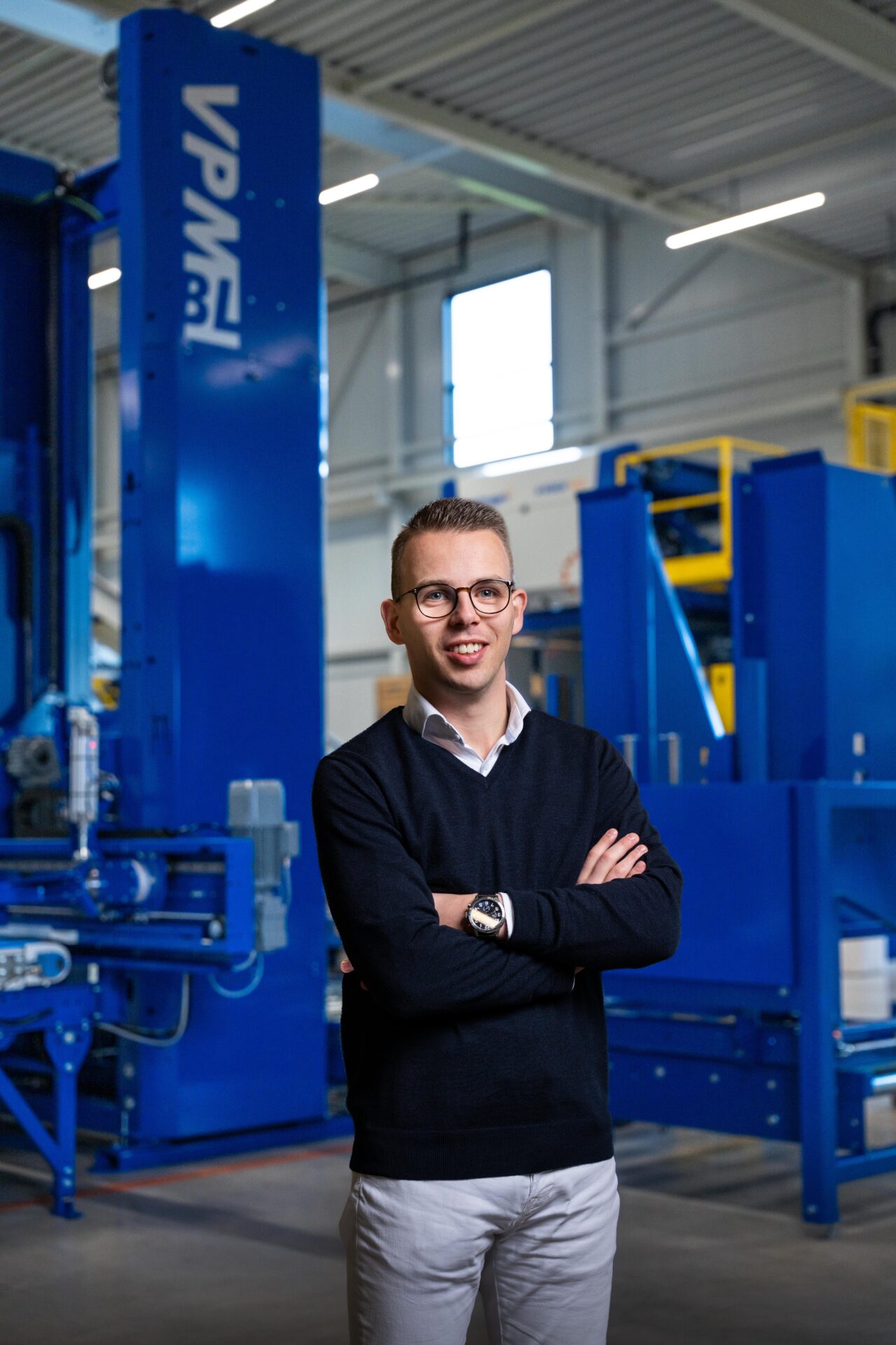
    a blog by Gerben Jongerman (Business Development Analyst)

A box of oranges at the grocery store may seem like an everyday product. But behind that box lies a world of technology, logistics, and international trade. A world where automation is becoming increasingly important and where Verbruggen Palletizing Solutions sees significant opportunities. The international citrus industry is a relatively new market for Verbruggen, but one with tremendous potential. Business Development Analyst Gerben Jongerman is exploring this industry, connecting with growers and partners worldwide, and identifying where Verbruggen can make a difference.


A global market in constant motion

Oranges, mandarins, lemons, and grapefruit: citrus fruit is grown, processed, and traded worldwide. It’s a massive industry where quality, reliable delivery, and cost efficiency are essential.

“The citrus market is international, competitive, seasonal, and incredibly dynamic,” Gerben explains. “Companies constantly have to adapt to changing circumstances, such as climate change, water shortages, plant diseases, labor shortages, and international trade flows. At the same time, requirements for quality, traceability, and packaging are becoming increasingly demanding.”

These developments are driving demand for reliable and flexible automation. “Companies are looking for ways to increase efficiency, reduce their dependence on manual labor, and make their operations more future-proof. That’s what makes this market so interesting for Verbruggen.”

Automation is becoming increasingly important

One of the biggest challenges in the citrus industry is the availability and cost of labor. During harvest season, packing houses must process enormous quantities of fruit within a short period.

“Many companies have already automated parts of their sorting and packaging processes, but boxes are still being stacked onto pallets manually,” Gerben explains. “That’s physically demanding work. Labor is getting harder to find, costs are rising, and regulations regarding physical strain are becoming stricter.”

Changes in international logistics add another challenge. Fruit is now frequently transported in containers, requiring pallets to be stacked higher, sometimes reaching 2.40 meters (nearly eight feet). The upper layers are almost impossible to stack manually without additional equipment.

“That makes automated palletizing increasingly attractive, not just for large production facilities but also for smaller and medium-sized packing houses. They want to increase capacity without having to expand their workforce at the same rate.”

Gerben sees promising opportunities in Central and South America, South Africa, and emerging citrus markets such as Egypt and Morocco. Even where manual labor remains relatively inexpensive, the demand for consistent quality and reliable production capacity is growing.

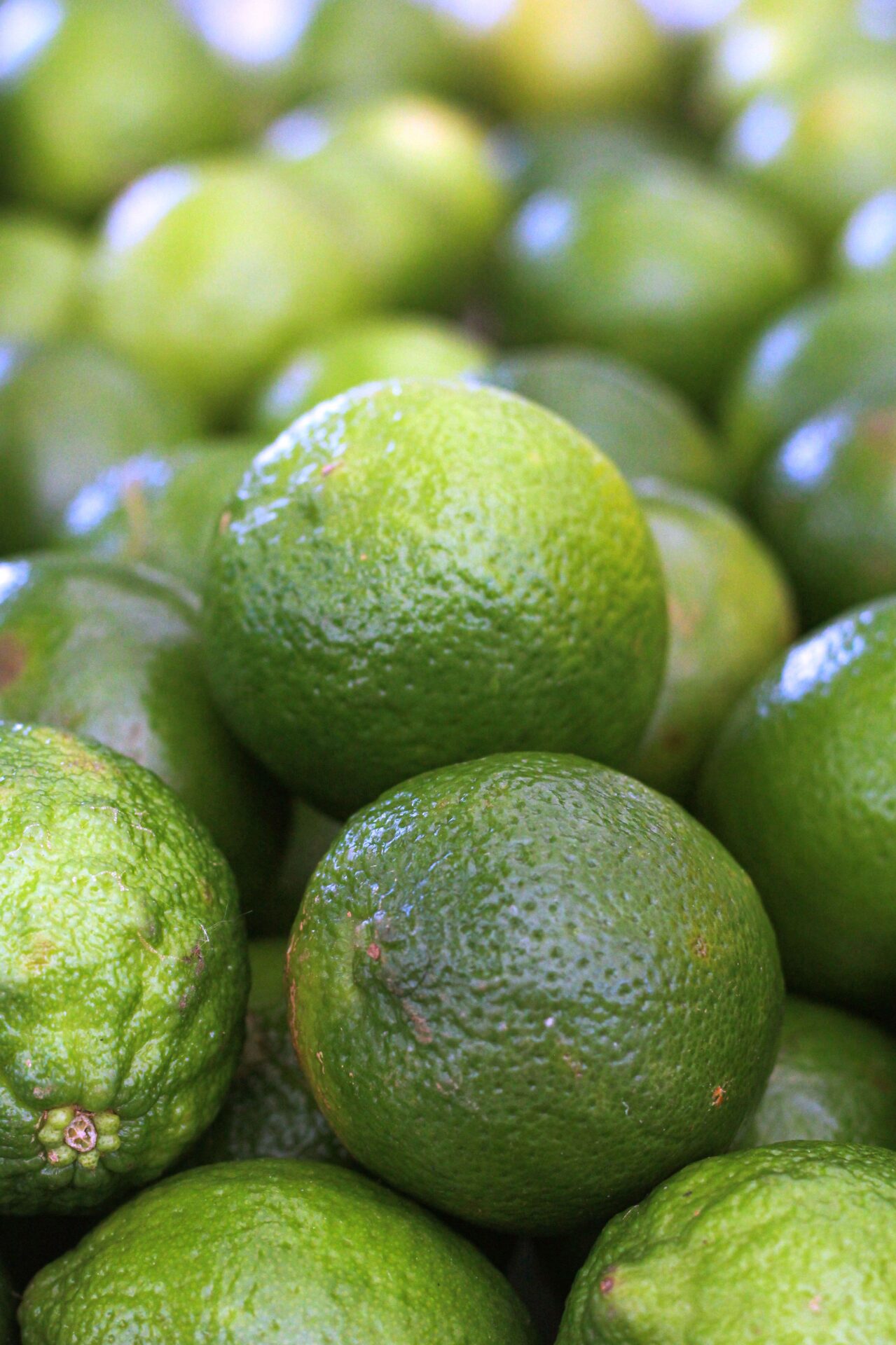
Limes

Stacking boxes of fruit? It’s not that simple!

Palletizing citrus fruit might seem straightforward, but the variety of packaging and the delicate nature of the product make it technically challenging. “Citrus is transported in cardboard boxes, plastic crates, and open trays. Every type of packaging has its own characteristics and requires a specific handling approach.”

Packaging is also becoming lighter and more sustainable. While recyclable cardboard and lightweight materials benefit the environment, they can be more vulnerable to stacking pressure. Temperature changes, humidity, and prolonged pressure during transportation can affect packaging stability. “If a box becomes deformed, the stability of the entire pallet can be compromised,” Gerben explains.

“That is why accurate palletizing also contributes to sustainability and logistical efficiency. By building stable, compact pallets and making optimal use of available pallet capacity, companies can improve storage and transport efficiency, reduce product damage, and potentially limit the amount of packaging and wrapping materials required. In that sense, operational efficiency and sustainability often go hand in hand.”

Citrus presents another unique challenge: ventilation. “Many boxes and layer sheets have ventilation openings that allow cold air to circulate through the pallet. That airflow is essential for keeping the fruit in good condition during transportation. Boxes must therefore be positioned precisely to prevent blocking the airflow.”

Layer sheets must also be placed accurately to ensure the stability of open trays. “A well-built pallet isn’t just a stack of boxes. It’s a reliable logistics unit that may have to travel thousands of miles.”
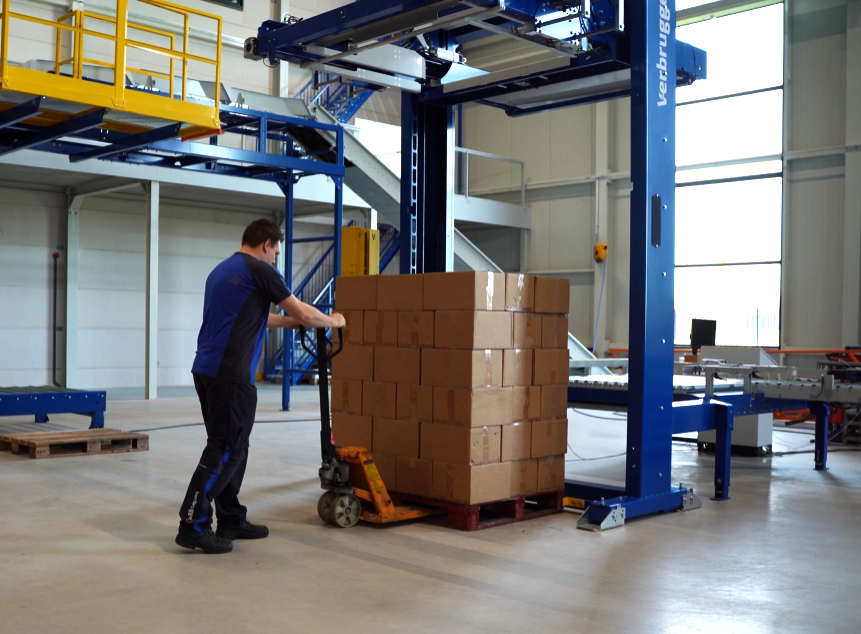
V-Stack 315

Flexibility is key

Another characteristic of the citrus industry is the wide variety of products and packaging. Packing houses often process different types of fruit throughout the year, while customers and export markets have varying requirements for pallet sizes and stacking patterns. “A machine needs to switch quickly between different products and packaging configurations. Lengthy changeovers directly affect production capacity,” Gerben explains.

Customers are therefore looking beyond stacking speed. Flexibility, ease of use, compact design, and integration into existing production lines are becoming increasingly important.

“With our product portfolio, we can accommodate different capacities, space limitations, and investment budgets. The V-Stack 315, for example, is an interesting solution for companies taking their first step toward automated palletizing. Compact, modular solutions make automation accessible to a wider range of businesses.”

Digital integration is another important development. Citrus products are often packaged for specific customers or brands, meaning each labeled box must reach the correct pallet. This also creates a growing need for order-driven palletizing. Connected systems can track where and when fruit was processed and which pallet it was placed on. Reliable integration with ERP and production management systems helps ensure that each box ends up on the right pallet, while maintaining traceability throughout the process. “Traceability is playing an increasingly important role. Machines and systems need to communicate effectively, making the palletizer an integrated part of the entire production line.”

Similar challenges worldwide, but different solutions

Through his international contacts, Gerben sees that citrus companies face similar challenges, although operating conditions vary considerably. “In countries with high labor costs, automation can quickly become financially attractive. Elsewhere, labor availability, export logistics, or increasing production capacity may be the main drivers.”

This requires an approach tailored to local circumstances. “There isn’t one solution that works for every packing house. The best solution isn’t necessarily the machine with the highest capacity, but the one that best matches the customer’s needs and ambitions.”

That’s why Gerben looks at the entire production process when visiting customers. “I want to understand how fruit moves through the facility, from sorting and packaging to palletizing. Where do delays occur? Where is manual labor still required? Sometimes a modern production line is limited by manual palletizing at the end. That’s where we can add real value.”

This approach also forms the basis of Verbruggen’s StackCheck, which helps companies identify opportunities to improve their entire end-of-line process.

New opportunities and international partnerships

The international Fruit Attraction trade show in Madrid offers Verbruggen opportunities to connect with citrus producers and industry partners.

Gerben identifies three key areas for growth.

  • “First, we want to further strengthen our position in the international fruit industry by applying our technical expertise and palletizing solutions to different packaging types.”
  • The second opportunity lies with small and medium-sized packing houses taking their first steps toward automation. “With compact, modular solutions, we can help these companies automate step by step, without requiring an entirely new production line.”
  • A third opportunity is collaborating with suppliers of sorting, packaging, and conveying systems.

“By combining our expertise with that of our partners, we can offer complete solutions. We want customers to see Verbruggen not just as a palletizer supplier, but as a reliable partner that helps improve their production processes.”

Reliable support is equally important. In a seasonal industry, downtime during peak periods can be costly. “With our remote service capabilities and support throughout the machine’s lifecycle, we can help customers keep their operations running reliably.”

Customers are therefore increasingly looking beyond the initial investment. They want solutions that combine reliable performance, low operating costs, energy efficiency, and long-term serviceability. Especially in a seasonal industry, minimizing downtime and maximizing machine availability are essential to achieving a strong return on investment.”

The packing house of the future

Gerben expects citrus packing houses to become significantly more automated and digitally connected over the next decade. “Sorting, grading, packaging, and palletizing will increasingly operate as one connected process. Machines will exchange data, and production lines will respond more quickly to changes in products, packaging, and volumes.”

Manual work, particularly physically demanding and repetitive tasks, will continue to decrease. Employees will increasingly focus on process monitoring, quality control, and maintenance. “Not every task needs to be fully automated. Sometimes partial automation already delivers significant improvements. The key is investing in the steps that truly add value.”

His advice to citrus producers considering automation is clear:
“Don’t start by asking which machine you want to buy. Start by identifying where your production process has the greatest potential for improvement. Look at delays, labor requirements, product damage, and capacity limitations. And think about where you want your business to be ten years from now.”

For Gerben, that’s exactly where Verbruggen can make a difference. “The most rewarding part is when we can genuinely help a customer make their production process smarter, more reliable, and better prepared for the future. Ultimately, we don’t just want to stack pallets. We want to contribute to our customers’ success and growth.”

Want to learn more about our End-of-Line solutions?

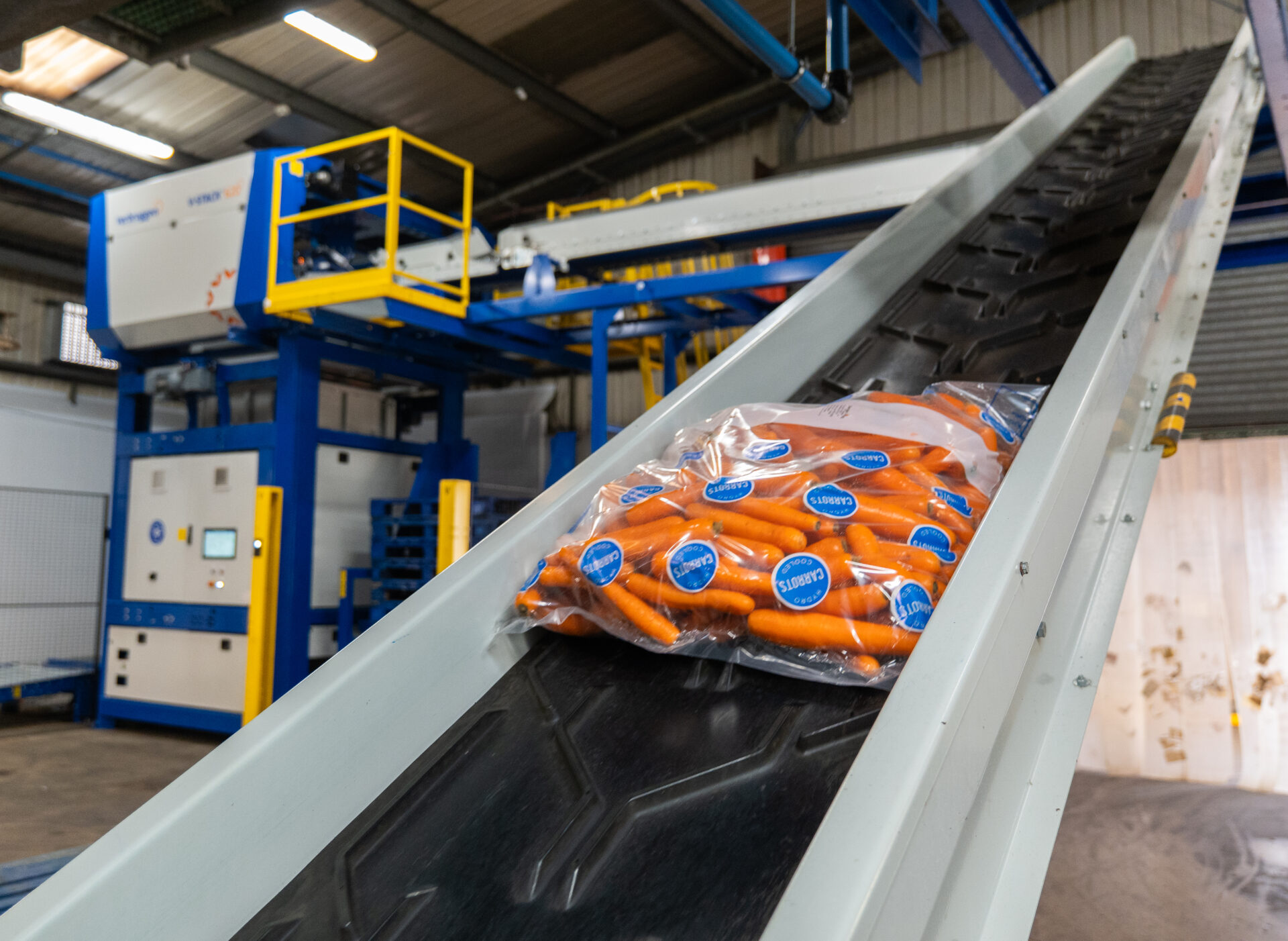
Palletizing carrots
17 November, 2026
Blog
From Field to Pallet: How Carrots Are Processed, Packed and Palletized

Carrots. We see them in supermarkets every day, but have you ever wondered what happens before they reach the shelves? There’s quite a journey b...
19 October, 2026
Blog
Fruit Attraction 2026: Three days of connections, partnerships and new opportunities

More than 121,000 visitors, around 2,500 exhibitors and professionals from over 150 countries. Fruit Attraction 2026 was a record-breaking edition, an...

17 August, 2026
Blog
Quality that lasts: Why Verbruggen machines keep performing for decades

Verbruggen has earned a global reputation for building robust palletizing solutions that continue to perform year after year. But what makes a palleti...

7 May, 2026
Blog
Service as the key to operational continuity

At Verbruggen, everything revolves around reliable palletizers designed to perform for years. But even the most robust machine requires attention to m...